




Blog / Lakeshore Kenner

Jeep Wrangler Generations Explained: YJ, TJ, JK, and JL

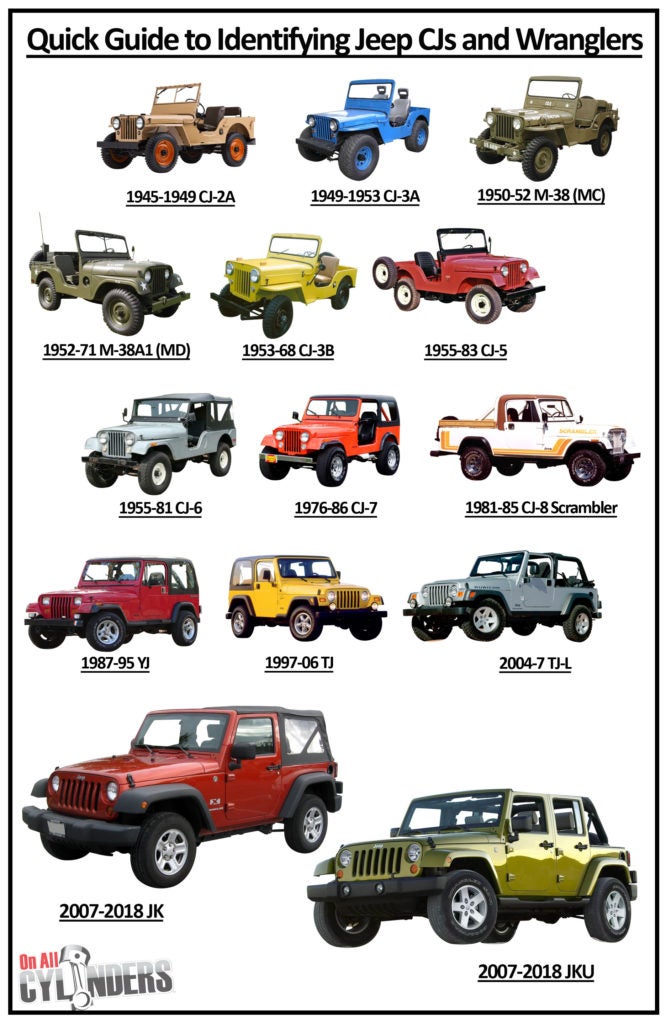
The Jeep Wrangler has always been more than a car—it's a symbol of freedom, adventure, and capability. Although all Wranglers have the same rugged DNA, Jeep enthusiasts often talk about various "generations" of the Wrangler using two-letter codes like YJ, TJ, JK, and JL. The codes don't stand for anything specifically, but they're a convenient way to refer to each version of the Wrangler as it has evolved over the years.

At Lakeshore CDJR of Kenner, we know that a lot of our shoppers adore the Wrangler, so let's get a closer look at what each generation brings to the table. 

Jeep Wrangler YJ (1987 – 1995)

The First Wrangler

The YJ was the first "Wrangler" to officially carry the name, launching in 1987 as a successor to the CJ series. While it carried on Jeep's legendary off-road toughness, the YJ was designed to be more comfortable and daily-driveable as well.

Key Features

   Square headlights (a hallmark that still makes the YJ instantly recognizable).

   Lower profile and wider track for better on-road stability.

 Leaf spring suspension, similar to previous Jeep models.

   Available with 4- and 6-cylinder engines.

 Why It Matters

  The YJ paved the way for Wranglers to become more daily-driver friendly without losing their trail-ready prowess.

Jeep Wrangler TJ (1997 – 2006)

 A Return to Jeep Tradition

After a short gap year in 1996, the TJ generation appeared in 1997 with one major alteration: round headlights were once again present, a subtle retro nod to Jeep heritage.

Major Features

   Coil-spring suspension (borrowed from the Jeep Grand Cherokee), which improved ride quality and off-road articulation.

Round headlights, restoring a traditional Jeep look.

 Details like the Rubicon trim, which introduced radical off-road upgrades directly from the factory.

   Available with manual and automatic transmissions.

 Why It Matters

  The TJ is beloved by enthusiasts for its mix of classic Wrangler character with modern driving comfort.

Jeep Wrangler JK (2007 – 2018)

 Bigger and More Versatile

The JK generation was a big shift for the Wrangler family: the introduction of the four-door Unlimited model, which opened the Wrangler up to families and adventurers who needed more space.

 Key Features

   Choice of two-door and four-door body styles.

   Added interior comfort and technology without sacrificing rugged capability.

   Stronger axles and better off-road systems.

 Soft tops and hard tops that are easier to configure, which are optional.

 Several trim levels, including Rubicon, Sport, and Sahara.

 Why It Matters

  The JK pushed the Wrangler into the mainstream without losing its sense of adventure and is one of the highest-selling vehicles for Jeep.

Jeep Wrangler JL (2018 – Present)

 Modern, Yet True to Its Roots

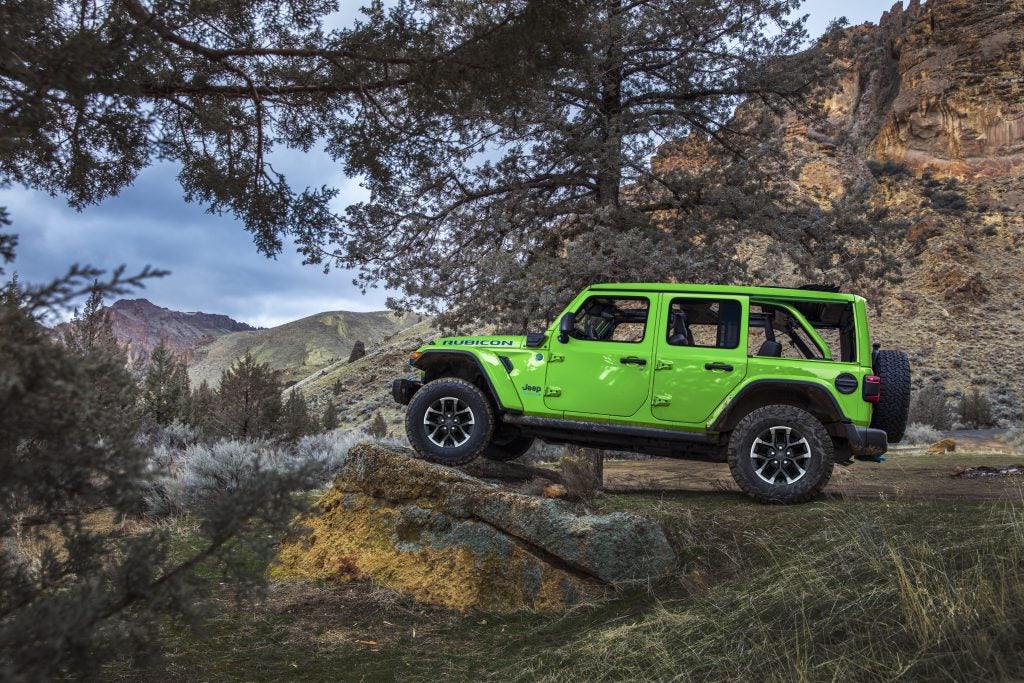
The JL is the latest Wrangler generation, continuing the legacy with more modern creature comforts and advanced tech features that drivers expect today.

 Standout Features

   Fresh exterior styling that still resonates retro Wrangler fashion.

   Lightweight aluminum doors and hood for improved efficiency and less weight.

   Various engine options, including turbocharged, V6, V8, and even hybrid (4xe).

 Advanced infotainment with Apple CarPlay, Android Auto, and premium audio options.

   Additional advanced safety features like blind-spot monitoring and adaptive cruise control.

   Improved roof and door designs for easier open-air driving.

 Why It Matters

  The JL helps make the Wrangler more relatable to drivers today without compromising trail capability and heritage credibility.

 Which Jeep Wrangler Is Right for You?

Each generation of Wrangler has a personality. The YJ brought comfort, the TJ refined the ride, the JK added versatility, and the JL blended heritage and technology. At Lakeshore CDJR of Kenner, we can help you find the Wrangler to fit your lifestyle—whether you prefer a brand-new JL with all the contemporary amenities or a pre-owned Wrangler with classic appeal.
Posted in:

Related Posts

Jeep Wrangler: Hard Top or Soft Top? Which One Is Right for You?

Mojito!, the Jeep® brand's audacious shade of green, is available for the first time on the class-leading 2025 Jeep Gladiator midsize pickup truck and returns to the color palette of the world’s most recognizable 4x4, the Jeep Wrangler. Jeep Wrangler: Hard Top or Soft Top? Which One Is Right for You? The Jeep Wrangler is perhaps one of the most iconic vehicles on the road today, its rough stuff ability, off-road heritage, and unmistakable appearance. One of the things that make a Wrangler so versatile is that you can make it fit your life, and one of the biggest decisions new and repeat Jeep owners will have to make is whether to use a hard top or soft top. Both have wonderful advantages, but which one to use will depend on the kind of usage you plan to put your Wrangler to, where you live, and what kind of driving experience you are looking for. The Appeal of the Hard Top A hard top Wrangler provides an element of ruggedness and year-round use. Made with heavy-gauge materials like fiberglass, hard tops are engineered to withstand more severe weather and provide a closed cabin experience. For individuals who live in colder, rainy climates, a hard top can be particularly worthwhile. Advantages of the Hard Top: Enhanced Insulation: Hard tops have stronger sound insulation, and thus less noise from the wind on the highway and a quieter ride overall. They also insulate better against extreme temperatures, making the cabin warmer in winter and cooler in summer. Better Security: Because the panels are rigid and lockable, hard tops are better protected from theft than fabric soft tops. This is ideal for city driving or for those who tend to leave things behind in their automobile. Durability: Hard tops hold up under heavy use better, particularly in areas with snow, hail, or prolonged rain. They will not weather or depreciate as quickly as fabric. Modularity: Many modern Wrangler hard tops are equipped with two- or three-piece designs, popularly known as "Freedom Tops," that allow you to remove only the panels above the front seats without having to eliminate the entire roof. Hard Top Drawbacks: Weight and Bulk: Hard tops are very heavy, at times requiring two people or special equipment to take out. Even storing them off the vehicle requires a lot of space. Less Convenient: If you like having the convenience of easily switching between open-road driving and roofed protection, a hard top makes it more difficult to do. Expensive: Hard tops are more expensive to buy when bought new and more costly to replace if crashed. The Charm of the Soft Top The soft top for the majority of Wrangler fans reflects the Jeep way of life. It offers open-air freedom and adaptability so that drivers can get in touch with the great outdoors with minimal inconvenience. It becomes easy to switch your Wrangler to the mood you are in, if you would rather have the roof half-rolled back or completely down. Soft Top Advantages: Versatility: Soft tops are lightweight and convenient to fold back or remove. Most contemporary designs even offer partial configurations, such as sunrider positions in which only the front portion is open. Open-Air Experience: Nothing captures the Jeep spirit more than quickly rolling down the doors and roof for a fully open ride. Soft tops make this possible within minutes. Lower Cost: Soft tops are normally cheaper to purchase and cheaper to replace than hard tops. Easier Storage: When removed, a soft top will fold up neatly and can be stored without taking up extra garage space. Drawbacks of the Soft Top: Noise: Fabric tops allow more wind noise and road noise, especially at high-way speeds. This is distracting to daily commuters who spend a great deal of time driving extended distances. Weather Protection: Soft tops are less protective against weather and therefore can be a issue in extremely hot summers or cold winters. Security: A desperate burglar might cut a soft top, which is less secure for stolen merchandise. Durability: Soft tops have a more wear-and-tear effect over time, especially in sunlight or inclement weather. Which Customers Should Choose Which Hard Top Buyers: Daily Commuters: If your Wrangler is to be your main work and daily shopping vehicle, a hard top provides improved comfort, reduced noise, and usage year-round. Cold or Wet Climate Drivers: Drivers in northern or coastal weather conditions will appreciate the warmth and security of a hard top. Security-Minded Owners: If you live in the city or carry things regularly inside your Jeep, the hard top's lockability and durability make it the preferable choice. Long-Term Buyers: If you want to keep your Wrangler for many years, a hard top offers greater durability with lesser replacement. Soft Top Buyers: Adventure Seekers: If you bought your Wrangler out of a passion for the outdoors, trail driving, or summer cruising, a soft top allows for spontaneous open-air adventures. Dwellers of Warm Climates: Drivers in warm or temperate climates will benefit most from the flexibility of a soft top. Weekend and Seasonal Owners: If your Wrangler is a recreational or secondary vehicle, a soft top is all about having fun, not extended use. Frugal Purchasers: Those that desire to save money in advance or avoid higher substitute costs down the road will find the soft top desirable. The Best of Both Worlds Some owners may prefer to buy both tops, using the hard top during winter months and switching to the soft top when better weather sets in. Although this approach requires a one-time greater investment, it provides ultimate convenience and allows you to enjoy the benefits of each to the fullest. Conclusion Ultimately, it comes down to lifestyle when choosing between a Jeep Wrangler hard top and a soft top. The hard top is all about practicality, comfort, and safety, while the soft top is about adventure, playfulness, and flexibility. By matching your driving style, weather, and requirements, you can choose the top that best suits your Wrangler life. Either way, the Jeep Wrangler remains one of the most versatile and exhilarating cars on the road, ready to keep pace with your own brand of adventure.

What is the Fastest Dodge Charger?

The Dodge Charger has been a symbol of American muscle for years — a car that combines brute force, aggressive design, and brain-searing speed. From its original debut in the 1960s as a classic muscle coupe to the high-performance beast it is today, the Charger has returned to its roots with a series of trims that deliver varying levels of speed and performance. The only debate question that gets people arguing, though, is: which is the fastest Dodge Charger? To answer that, we’ll explore the lineup of Dodge Charger models — from the everyday performance sedans to the record-breaking Hellcat and Jailbreak editions — and break down their speed, performance specs, and what makes each unique. 1. Dodge Charger SXT and GT – The Everyday Muscle Sedans And at the entry point of the Charger family are the SXT and GT trims. They may not be "the quickest," but they are still full of Dodge's performance DNA and lots of muscle-car attitude. Engine: 3.6-liter Pentastar V6 Horsepower: 292 hp (SXT) / 300 hp (GT) Torque: 260 lb-ft 0–60 mph: Approximately 6.2 seconds Top Speed: Approximately 131 mph These models are ideal for those who want performance with functionality. They come equipped with all-wheel drive and deliver silky smooth acceleration ideal for driving around town. While not as fast as the V8 Chargers, they deliver a nice kick for the money. 2. Dodge Charger R/T – Classic HEMI Power Up the chain, however, things get increasingly more powerful in the Charger R/T. The "R/T" designation stands for "Road/Track," and this trim includes the iconic 5.7-liter HEMI V8 engine that's beloved by Dodge fans. Engine: 5.7-liter HEMI V8 Horsepower: 370 hp Torque: 395 lb-ft 0–60 mph: About 5.2 seconds Top Speed: 155 mph The Charger R/T is a compromise of performance and affordability. It delivers that retro HEMI sound and offers enough speed that makes highway passing a breeze. Not the fastest, but it's the entry point for the V8 trim line and is a favorite among fans who want performance without the eye-popping cost or fuel demand of the upper trims. 3. Dodge Charger Scat Pack – Where Serious Performance Begins For real performance muscle without crossing the supercharged threshold, the Charger Scat Pack is the ticket. This is a fan favorite because it comes with the naturally aspirated 6.4-liter 392 HEMI V8, which has monstrous power and track-worthy acceleration. Engine: 6.4-liter 392 HEMI V8 Horsepower: 485 hp Torque: 475 lb-ft 0–60 mph: 4.3 seconds Top Speed: 175 mph The Scat Pack Charger is fast — faster than most non-supercharged muscle cars in its class. It also has Brembo brakes, launch control, and adaptive damping suspension to complement it for agility as well as for speed. For those who want pure, naturally aspirated performance at a cost less than a supercharged engine, the Scat Pack is quite likely the most exhilarating option in the lineup. 4. Dodge Charger SRT Hellcat – The Supercharged Monster "Hellcat" is the word on everyone's lips for pure performance, and the Charger SRT Hellcat is where Dodge transforms a family car into a speed behemoth. The Hellcat brought supercar power to the muscle car world, redefining the rulebook on performance forever. Engine: 6.2-liter Supercharged HEMI V8 Horsepower: 717 hp Torque: 650 lb-ft 0–60 mph: 3.6 seconds Top Speed: 203 mph With a peak speed crossing the 200 mph barrier, the Charger Hellcat is among the fastest four-door vehicles in the world. The supercharged V8 provides unwavering speed, with its potency appearing virtually limitless. Despite being a heavy, large sedan, its aerodynamics and design make it dance through corners with surprising quickness and agility. 5. Dodge Charger Hellcat Redeye – More Power, More Speed As if the production Hellcat were too fast, Dodge turned it up another notch with the Charger SRT Hellcat Redeye. This trim carries the same supercharged 6.2-liter engine and drives it to even higher levels. Engine: 6.2-liter Supercharged HEMI High-Output V8 Horsepower: 797 hp Torque: 707 lb-ft 0–60 mph: 3.4 seconds Top Speed: 203 mph Redeye's additional muscle arrives by way of a larger supercharger, strengthened internal parts, and improved fuel and cooling systems. It's not just a horsepower increase — it's a completely different driving experience. The acceleration is savage but sophisticated, and the Redeye is highly civilized even in triple-digit territory. This trim was the fastest production Charger ever made for several years. 6. Dodge Charger SRT Hellcat Redeye Jailbreak – The Ultimate Power Expression The final and fastest model of the Charger series is the SRT Hellcat Redeye Jailbreak variant. It does away with the performance restrictions of previous models and allows for full customization- in appearance as well as power output. Engine: 6.2-liter Supercharged HEMI High-Output V8 Horsepower: 807 hp Torque: 707 lb-ft 0–60 mph: 3.3 seconds Top Speed: 203 mph The Jailbreak variant pushes performance to the absolute limits of what can be achieved in a street-legal four-door sedan. With a whopping 807 horsepower on offer, it is officially the quickest and most powerful Dodge Charger ever. The Jailbreak is also recognized by its capacity to be personalized in appearance, from unique color schemes to distinctive badging and wheel choices. This model really is the culmination of Dodge's muscle car engineering — a befitting conclusion to an era characterized by high-octane performance. 7. The Fastest Dodge Charger – Official Rankings Model Engine Horsepower (hp) Torque (lb-ft) 0–60 mph (seconds) Top Speed (mph) Notes / Highlights SXT 3.6L Pentastar V6 292 260 6.4 131 Entry-level model; available AWD; strong value for daily use GT 3.6L Pentastar V6 300 264 6.2 131 Sportier version of SXT with RWD or AWD options R/T 5.7L HEMI V8 370 395 5.2 155 Classic HEMI power with traditional muscle feel Scat Pack 6.4L 392 HEMI V8 485 475 4.3 175 Naturally aspirated power; great mix of speed and control SRT Hellcat 6.2L Supercharged HEMI V8 717 650 3.6 203 Breaks 200 mph; supercharged V8 dominance SRT Hellcat Redeye 6.2L Supercharged High-Output HEMI V8 797 707 3.4 203 Enhanced supercharger; track-tuned performance SRT Hellcat Redeye Jailbreak 6.2L Supercharged High-Output HEMI V8 807 707 3.3 203 Fastest & most powerful Charger ever; customizable “Jailbreak” design options 8. Why the Charger Jailbreak Excels The Dodge Charger SRT Hellcat Redeye Jailbreak isn't just fast — it's the definition of American muscle brilliance. With 807 horsepower, it is the world's fastest and most powerful production sedan. The fact that it is able to do so while remaining usable as a full-size four-door sedan with generous room for five passengers and a spacious trunk only adds to its greatness. The Jailbreak also toasts personalization. Dodge created it for those who demand performance and uniqueness, with hundreds of combinations available for wheels, stripes, badges, and interior trim. It's a collector's wet dream and a showstopper for those who relish raw, unadulterated horsepower. Final Verdict So, what is the fastest Dodge Charger? That honor belongs to the Dodge Charger SRT Hellcat Redeye Jailbreak, with 807 horses, a 3.3-second 0–60 time, and a top speed of 203 mph. It's a car that embodies all the Charger nameplate is all about — attitude, power, and unrelenting velocity. From the modest V6 SXT to the brutal Jailbreak, the Charger lineup demonstrates Dodge has something to offer any driver, but the Jailbreak is the ultimate expression of American muscle capability.